AI learning is made simple with CloudShine’s specialized courses and interactive training!

0 k+
Trusted Companies

0 k+
Complete Graduation
0 %
Students Ratings

Comprehensive Course Curriculum – Covers Python, Machine Learning, Computer Vision, NLP, GANs, and other essential AI domains.

10-Month Intensive Program – Includes 5 months of Classroom/LVC Training followed by 5 months of LIVE Project mentoring.

Unlimited AI Cloud Lab Access – Provides continuous hands-on practice with real-time cloud-based AI tools.

Our story Creating intelligent solutions with AI and robotics

Creating intelligent solutions with innovative AI technology, we strive to simplify complex problems and drive smarter decision-making.

Our Mission

To empower individuals and businesses with cutting-edge AI solutions, transforming industries and driving innovation for a smarter future

Our Vision

To provide accessible, high-quality AI education and technology, enabling learners and organizations to harness AI for growth and success.

Why Choose Artifice ?

Artifice provides top-notch training with industry-expert instructors, real-time project experience, and a dedicated job placement officer.

100% Refund Guarantee

If you're not satisfied with our training, we offer a full refund,Terms and Conditions

Dedicated job Placement officer

Our expert career advisors assist you with job search, resume building, and interview preparation.

Weekly Training Quality

We ensure consistent, high-standard training sessions every week for continuous learning.

Well Qualified Instructors

Learn from industry experts with years of hands-on experience in their respective fields.

real time project work experience

Gain practical knowledge by working on industry-relevant projects to enhance your skills.

Weekly Assignment

Regular assessments help reinforce learning and track progress effectively.

Capstone projects

Work on end-to-end projects that simulate real-world business challenges and solutions.

Online Assessment

Evaluate your skills with structured tests that prepare you for real-world applications.

Pricing & feature comparison table

FEATURES Self-Paced
₹25,000
Instructor-Led +
Placement Assistance
₹90,000
Instructor-Led +
Placement Guarantee
₹1,90,000
Recorded Video
Public Instance Access
Private Instance Access
Live Class
WhatsApp Group with Instructor and Co-Students
Doubt Solving Session
Placement Assistance Support
Resume Building Session
Mock Technical Interview Session
Technical Interview Support
100% Refund Guarantee (T&C apply)
Promote your profile to companies for Interview
Register NowRegister NowRegister Now

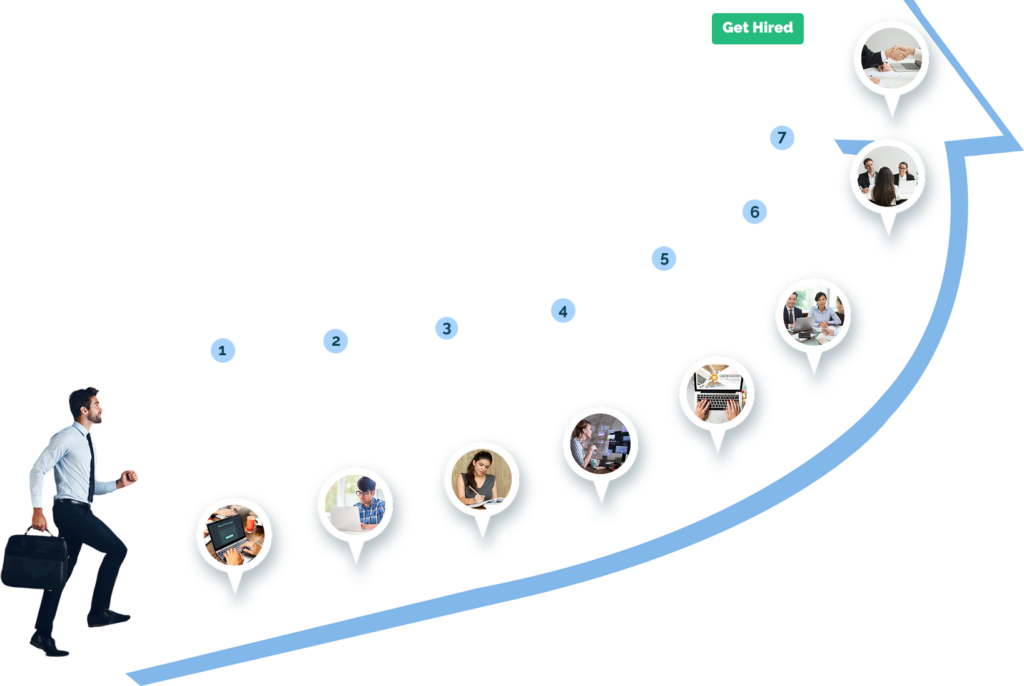
CloudShine Career Building RoadMap Job assistance gaurentted, get 100% refund if not selected

Trusted By Big Companies

Trusted By Big Companies

BB1mvdSn2

India’s Leading Artificial Intelligence Institute Offering the Most Advanced Course Curriculum.

Pursuing AI Training at Cloud Shine guarantees a high-paying job and a bright career path. Through hands-on training and expert guidance, students gain the ability to apply AI across industries. Upon course completion, they receive an industry-recognized certification that validates their expertise.

Cloud Shine Training’s AI certification boosts career prospects by equipping students with in-demand skills sought by top employers. Our trainers also encourage pursuing international certifications to stand out in a competitive job market. This certification enhances credibility and opens doors to securing ideal positions in leading industries.

India’s Leading Artificial Intelligence Institute Offering the Most Pursuing AI Training at Cloud Shine guarantees a high-paying job and a bright career path. Through hands-on training and expert guidance, students gain the ability to apply AI across industries. Upon course completion, they receive an industry-recognized certification that validates their expertise.

robot-s-hands-typing-on-keyboard.jpg

Course Overview

Cloudshine Pro specializes in offering cutting-edge, professional training solutions in technology and business intelligence. Our expertly designed courses empower learners with essential skills in Python, machine learning, SQL, PowerBI, and more, preparing them for the demands of today’s tech-driven job market. With a focus on practical applications and real-world problem-solving, Cloudshine Pro is your gateway to becoming a proficient and job-ready professional in the tech industry.

Python

Master Python from basics to advanced with hands-on projects, expert guidance, and real-world applications.

Dependant Libraries

Understand and master essential libraries in Python, Machine Learning, and Data Science.

Statistics

Learn fundamental to advanced statistical concepts for data analysis andmachine learning applications.

Mathematics

Build a strong foundation in mathematical concepts essential for data science, machine learning, and AI applications.

Machine Learning

Learn ML concepts, algorithms, and real-world applications through hands-on projects and expert instruction.

Deep Learning

Dive into neural networks, AI models, and real-world applications with hands-on projects and expert guidance.

Generative AI

Explore AI-driven creativity with hands-on training in deep learning models for text, image, and content generation.
Tools and LanguagesCovered in Data Science

Course Details and Fees

Start Dates

New batches begin every month. Check our website for details.

Duration

2 months on weekdays, 3 months on weekends.

Fees

₹90,000 with up to 20% scholarship based on academic performance.

Total Hours

Over 90 hours of live, online learning.

Most Popular Questions

Curious about AI? Here are the most popular questions students ask! Learn about career opportunities, salary prospects, top AI skills, job roles, and industry demand. Discover the best AI courses, prerequisites, and how to transition into AI from different backgrounds. Get insights into real-world applications, future trends, and how AI is shaping industries. Understand the difference between AI, ML, and Deep Learning. Find out how to gain hands-on experience and build AI projects. Your journey into AI starts with the right questions!”
Yes! Bangalore is India's tech hub, offering numerous AI job opportunities with high salaries and career growth in top companies.

What People Say About Our AI Service & Technology

Our AI service is transforming businesses with cutting-edge technology, delivering smarter automation and insights. Customers love its efficiency, accuracy, and seamless integration into their workflows.

"This AI tool made learning so much easier! It helped me complex topics with clear explanations."

    Rohan K
    Rohan K

    Student

    "I improved my grades thanks to this AI! It provides instant answers and guides me through tough problems."

      John S
      John S

      Student

      – "A game-changer for my studies! The AI's personalized support keeps me motivated and on track."

        Sophia M.
        Sophia M.

        Student

        "This AI tutor is better than any textbook! It simplifies concepts and makes studying fun and efficient."

          Noah L.
          Noah L.

          Student

          0 +
          Total Students
          0 +
          Complete Graduation
          0 %
          Students Ratings
          0 +
          Products AI Award
          Days
          Hours
          Minutes
          Seconds

          Send us a message

          Get in Touch

          Office Location

          Deolite Concepts, Fourth Floor, SSR Complex, Varthur Main Rd, above ICICI Bank, Kumarapalli, Thubarahalli, Whitefield, Bengaluru, Karnataka 560066

          Phone Number

          +91 7587123123

          Drop Us a Line

          inquiry@cloudshinepro.com

          Hurry! Offer Ends In⏳

          Days
          Hours
          Minutes
          Seconds

          Module -1

          Introduction to Python (45 mins)

          1. Overview of Python and its Applications

          2. Python Installation and Setup (Anaconda, IDEs) Writing and Running Python Programs

          3. Basic Syntax: Indentation, Comments, Variables.

          Data Types and Variables (45 mins)

          1. Numbers (Integers, Floats, Complex)

          2. Strings: Manipulation, Methods
          3. Booleans
          4. Lists, Tuples, Dictionaries, Sets
          5. Type Conversion

          Control Flow and Loops (1 hour)

          1. Conditional Statements: if, elif, else
          2. Looping Constructs: for and while loops
          3. Break, Continue, Pass Statements
          4. List Comprehension

          Functions and Modules (1 hour)

          1. Defining and Calling Functions
          2. Parameters and Return Values
          3. Lambda Functions
          4. Importing and Using Modules
          5. Standard Python Libraries

          File Handling (30 mins)

          1. Reading and Writing Files
          2. Working with Text Files and CSV
          3. Handling File Exceptions

          Error Handling and Exceptions (30 mins)

          1. Try, Except, Else, Finally Blocks Custom Exceptions

          Object-Oriented Programming (OOP) (1 hour) Classes and Objects

          1. Constructors and Destructors
          2. Inheritance, Polymorphism

          3. Encapsulation and Abstraction

          Final Project/Exercise (30 mins)

          A small project bringing all concepts together Hands-on coding and problem-solving session.

          Module 1

          Introduction to Python Libraries (30 mins)

          1. What are Libraries and Dependencies?
          2. Installing Libraries with pip
          3. Virtual Environments: venv and conda
          4. Popular Libraries Overview (Numpy, Pandas, Matplotlib, etc.)

          NumPy: Numerical Python (1 hour)

          1. Introduction to NumPy Arrays
          2. Array Indexing and Slicing
          3. Array Operations: Arithmetic, Broadcasting
          4. Reshaping and Resizing Arrays
          5. Working with Matrices
          6. Common NumPy Functions

          Pandas: Data Analysis (1 hour)

          1. Introduction to DataFrames and Series
          2. Importing and Exporting Data (CSV, Excel)
          3. Data Manipulation: Filtering, Sorting, Aggregation Handling Missing Data
          4. Merging and Joining DataFrames
          5. GroupBy and Pivot Tables

          Matplotlib & Seaborn: Data Visualization (1 hour)

          1. Introduction to Data Visualization
          2. Basic Plots with Matplotlib (Line, Bar, Scatter)
          3. Customizing Plots: Titles, Labels, Legends
          4. Subplots and Plot Layouts
          5. Seaborn Overview: Advanced Plotting Techniques Visualizing Data Distributions and Correlations

          SciPy: Scientific Computing (45 mins)

          1. Introduction to SciPy Library
          2. Linear Algebra with SciPy
          3. Optimization Techniques
          4. Signal and Image Processing
          5. Statistical Functions and Integrals

          Scikit-learn: Machine Learning (1 hour)

          1. Overview of Scikit-learn and Machine Learning
          2. Supervised Learning: Linear Regression, Classification Model Training and Evaluation
          3. Cross-Validation and Grid Search
          4. Unsupervised Learning: Clustering (K-Means)

          Requests: Working with APIs (45 mins)

          1. Introduction to HTTP Requests
          2. Sending GET, POST, PUT, DELETE Requests
          3. Handling API Responses and JSON Data
          4. Parsing and Using API Data in Python

          Final Project/Exercise (30 mins)

          Building a Data Analysis Pipeline using Pandas and Matplotlib Using External APIs with Requests to Fetch and Analyze Data


          Module 1: Descriptive Statistics (6 Hours)

          Introduction to Statistics (1 Hour)

          1. Definition and Importance of Statistics
          2. Types of Data: Qualitative vs. Quantitative
          3. Levels of Measurement: Nominal, Ordinal, Interval, Ratio Sampling Methods and Techniques

          Measures of Central Tendency (1 Hour)

          1. Mean, Median, Mode
          2. Choosing the Right Measure
          3. Calculation of Central Tendency for Raw and Grouped Data Use Cases and Applications

          Measures of Dispersion (1 Hour)

          1. Range, Interquartile Range (IQR)
          2. Variance and Standard Deviation
          3. Coefficient of Variation
          4. How Dispersion Measures Spread in Data

          Data Visualization (1 Hour)

          1. Graphical Representation of Data
          2. Histograms, Boxplots, Bar Charts, Pie Charts
          3. Scatterplots and Time Series
          4. Visualizing Distributions and Trends

          Skewness and Kurtosis (1 Hour)

          Understanding Skewness: Positive, Negative, Symmetry Kurtosis: Leptokurtic, Platykurtic, Mesokurtic Distributions Practical Examples and Interpretation

          Correlation and Covariance (1 Hour)

          1. Understanding Relationships between Variables
          2. Pearson’s Correlation Coefficient
          3. Spearman’s Rank Correlation
          4. Covariance and its Interpretation

          Module 2: Probability Theory (6 Hours)

          Introduction to Probability (1 Hour)

          Basic Definitions: Experiment, Sample Space, Event Classical, Relative Frequency, and Subjective Probabilities Rules of Probability: Addition and Multiplication Rules

          Conditional Probability and Independence (1 Hour)

          1. Concept of Conditional Probability
          2. Bayes’ Theorem: Applications and Examples
          3.    Independent vs. Dependent Events

          Random Variables and Probability Distributions (1.5 Hours)

          1. Discrete vs. Continuous Random Variables
          2. Probability Mass Function (PMF) and Probability Density Function (PDF) Cumulative Distribution Function (CDF)

          Common Distributions (2 Hours)

          1. Binomial Distribution: Definition, Properties, and Examples Poisson Distribution: Applications in Real World Scenarios
          2. Normal Distribution: Bell Curve, Properties, Z-Scores
          3. Other Distributions: Exponential, Uniform, Chi-Square

          Law of Large Numbers and Central Limit Theorem (0.5 Hour)

          1. Concept of Law of Large Numbers
          2. Central Limit Theorem (CLT) and its Importance in Statistics Applications of CLT in Sampling

          Module 3: Inferential Statistics (6 Hours)

          Sampling Distributions (1 Hour)

          1. Concept of a Sampling Distribution
          2. Sampling Error and Standard Error
          3. Sampling Distributions of the Sample Mean and Sample Proportion

          Hypothesis Testing Basics (1.5 Hours)

          1. Null Hypothesis vs. Alternative Hypothesis
          2. Type I and Type II Errors
          3. P-value, Significance Levels (α), and Critical Value
          4. One-Tailed vs. Two-Tailed Tests

          Z-Test and T-Test (1.5 Hours)

          1. When to Use Z-Test vs. T-Test
          2. One-Sample and Two-Sample Z-Test
          3. Independent and Paired T-Tests
          4. Practical Applications and Calculation

          Analysis of Variance (ANOVA) (1 Hour)

          1. One-Way and Two-Way ANOVA
          2. F-Statistic and its Use in Comparing Multiple Groups
          3. Assumptions of ANOVA and Post-Hoc Tests

          Chi-Square Tests (1 Hour)

          1. Chi-Square Goodness-of-Fit Test
          2. Chi-Square Test for Independence
          3. Interpreting the Results of Chi-Square Tests

          Regression Analysis (1 Hour)

          1. Simple Linear Regression: Estimating Relationships
          2.  Multiple Regression: Handling Multiple Variables
          3. Coefficients, R-Squared, and Model Fit
          4. Residual Analysis and Assumptions

          Module 4: Applications of Statistics (Optional Add-On - 3 Hours)

          Time Series Analysis (1 Hour)

          1. Components of Time Series: Trend, Seasonality, Noise Moving Averages, Exponential Smoothing
          2. Autoregressive Models

          Non-Parametric Tests (1 Hour)

          1. When to Use Non-Parametric Tests
          2. Mann-Whitney U Test, Kruskal-Wallis Test
          3. Practical Applications

          Case Studies and Real-Life Applications (1 Hour)

          Application of Statistics in Business, Medicine, Engineering Analysis of Case Studies using Statistical Techniques

          Module 1: Introduction to Python for Mathematics (1 Hour)

          Overview of Python and Its Mathematical Capabilities (0.5 Hour)

          1. Why Use Python for Mathematics?
          2. Basic Python Syntax: Variables, Data Types, and Operators
          3. Introduction to Python’s Mathematical Libraries: NumPy, SciPy, SymPy

          Basic Mathematical Operations in Python (0.5 Hour)

          Arithmetic Operations: Addition, Subtraction, Multiplication, Division, Exponentiation

          Using the Math Library for Built-in Mathematical Functions (e.g., math.sqrt(), math.sin(), math.cos()) Working with Complex Numbers

          Module 2: Linear Algebra in Python (1 Hour)

          Vectors and Matrices (0.5 Hour)

          1. Creating Vectors and Matrices using NumPy
          2. Basic Matrix Operations: Addition, Subtraction, Multiplication, Transposition
          3. Scalar and Matrix Multiplication

          Solving Systems of Linear Equations (0.5 Hour)

          1. Gaussian Elimination and Row Reduction
          2. Using numpy.linalg.solve() for Solving Linear Equations
          3. Determinants and Inverses of Matrices

          Module 3: Calculus in Python (1 Hour)

          Differentiation and Integration (0.5 Hour)

          Numerical Differentiation using NumPy and SciPy

          Using scipy.integrate for Numerical Integration (Definite and Indefinite Integrals) Symbolic Differentiation and Integration using SymPy

          Solving Differential Equations (0.5 Hour)

          1. Introduction to Ordinary Differential Equations (ODEs)
          2. Using scipy.integrate.odeint() for Solving ODEs
          3. Real-world Applications of Differential Equations

          Module 4: Discrete Mathematics in Python (1 Hour)

          Sequences and Series (0.5 Hour)

          1. Arithmetic and Geometric Progressions
          2. Summing Sequences using Python
          3. Calculating Factorials and Fibonacci Sequences

          Combinatorics and Probability (0.5 Hour)

          1. Permutations and Combinations using itertools
          2. Probability Calculations using Python
          3. Monte Carlo Simulations for Probabilistic Problems

          Additional Content (Optional, if Time Allows)

          Mathematical Visualization (0.5 Hour)

          Visualizing Data and Functions with Matplotlib

          Plotting Mathematical Functions and Geometrical Shapes

          Module 1: Introduction to Machine Learning (2 Hours)

          Overview of Machine Learning (1 Hour)

          1. What is Machine Learning?
          2. Types of Machine Learning: Supervised, Unsupervised, and Reinforcement Learning Machine Learning vs. Traditional Programming
          3. Applications of Machine Learning in Different Domains

          Key Concepts and Terminology (1 Hour)

          1. Features, Labels, and Datasets
          2. Training and Testing Data
          3. Overfitting and Underfitting
          4. Bias-Variance Tradeoff

          Module 2: Data Preprocessing (2 Hours)

          Data Cleaning (1 Hour)

          1. Handling Missing Data
          2. Removing Duplicates
          3. Data Imputation Techniques

          Feature Engineering (1 Hour)

          1. Feature Scaling: Normalization and Standardization
          2. Encoding Categorical Variables
          3. Feature Selection Techniques
          4. Dimensionality Reduction: Principal Component Analysis (PCA)

          Module 3: Supervised Learning – Regression Algorithms (3 Hours)

          Linear Regression (1.5 Hours)

          1. Introduction to Linear Regression
          2. Assumptions and Limitations
          3. Implementing Linear Regression using Python (Scikit-learn)
          4. Evaluating Regression Models: Mean Squared Error, R² Score

          Polynomial Regression and Ridge/Lasso Regression (1.5 Hours)

          1. Polynomial Regression: When and Why?
          2. Regularization Techniques: Ridge and Lasso
          3. Practical Example and Model Tuning

          Module 4: Supervised Learning – Classification Algorithms (3 Hours)

          Logistic Regression (1 Hour)

          1. Introduction to Logistic Regression
          2. Binary Classification
          3. Sigmoid Function and Decision Boundaries
          4. Performance Metrics: Precision, Recall, F1 Score, AUC-ROC

          Decision Trees and Random Forests (1.5 Hours)

          1. Introduction to Decision Trees
          2. Entropy, Gini Index, and Information Gain
          3. Overfitting and Pruning Techniques
          4. Introduction to Random Forests and Bagging

          Support Vector Machines (0.5 Hour)

          1. Introduction to SVM and Hyperplanes
          2. Kernels in SVM
          3. Practical Implementation in Python

          Module 5: Unsupervised Learning (3 Hours)

          Clustering Techniques (1.5 Hours)

          1. Introduction to Clustering: K-Means and Hierarchical Clustering Evaluating Clustering Algorithms: Silhouette Score
          2. Practical Application of K-Means Clustering using Python

          Dimensionality Reduction Techniques (1.5 Hours)

          1. Introduction to Principal Component Analysis (PCA) t-SNE for Data Visualization
          2. Using PCA to Reduce Dimensionality for Large Datasets

          Module 6: Ensemble Learning (1.5 Hours)

          Introduction to Ensemble Methods (0.5 Hour)

          1. What is Ensemble Learning?
          2. Why Use Ensembles? Reducing Bias and Variance

          Bagging and Boosting (1 Hour)

          1. Bagging Techniques: Random Forest
          2. Boosting Techniques: AdaBoost, Gradient Boosting, XGBoost Comparing Bagging and Boosting
          3. Practical Implementation of Ensemble Methods

          Module 7: Model Evaluation and Hyperparameter Tuning (2 Hours)

          Model Evaluation Techniques (1 Hour)

          1. Cross-Validation: K-Fold and Leave-One-Out
          2. Evaluating Models Using Scoring Metrics
          3. Train-Test Split and Hold-Out Method

          Hyperparameter Tuning and Optimization (1 Hour)

          1. Grid Search and Random Search for Hyperparameter Tuning Optimizing Models Using Scikit-learn
          2. Practical Hyperparameter Tuning in Python

          Module 8: Case Study and Project Work (3 Hours)

          Case Study on Supervised Learning (1.5 Hours)

          1. End-to-End Machine Learning Workflow
          2. Problem Definition, Data Cleaning, and Model Building
          3. Model Evaluation and Tuning
          4. Hands-On Project: Kaggle/UCI Dataset

          Unsupervised Learning Case Study (1.5 Hours)

          1. Clustering and Dimensionality Reduction on a Real Dataset Application of PCA and K-Means
          2. Project Presentation and Discussion

          Module 1: Introduction to Deep Learning (2 Hours)

          Introduction to Neural Networks and Deep Learning (1 Hour)

          1. Definition of Deep Learning
          2. Overview of Neural Networks and their Structure (Neurons, Layers, Weights) Differences Between Machine Learning and Deep Learning
          3. Real-World Applications of Deep Learning

          Key Concepts in Deep Learning (1 Hour)

          1. Activation Functions (ReLU, Sigmoid, Tanh)
          2. Loss Functions (Cross-Entropy, Mean Squared Error)
          3. Optimization Techniques (Gradient Descent, Stochastic Gradient Descent)

          Module 2: Artificial Neural Networks (3 Hours)

          Building Blocks of Artificial Neural Networks (1 Hour)

          1. Neurons, Layers (Input, Hidden, Output)
          2. Forward Propagation and Backpropagation
          3. Weights and Biases
          4. Python Implementation using Keras/TensorFlow

          Training Neural Networks (1 Hour)

          1. Cost Functions and Optimization
          2. The Vanishing Gradient Problem and Solutions
          3. Batch Training, Epochs, and Iterations
          4. Overfitting: Regularization and Dropout

          Practical Implementation of Neural Networks (1 Hour)

          1. Building and Training a Simple Neural Network
          2. Model Evaluation using Accuracy, Precision, Recall
          3. Hands-On with Python: Using Keras/TensorFlow

          Module 3: Convolutional Neural Networks (CNNs) (3 Hours)

          Introduction to CNNs (1 Hour)

          1. Understanding Convolutions and Filters
          2. Pooling Layers (Max Pooling, Average Pooling)
          3. CNN Architecture (LeNet, AlexNet, VGG)
          4. Applications of CNNs in Computer Vision

          Building CNN Models (1 Hour)

          1. Building and Training CNN from Scratch
          2. CNN Implementation Using Keras/TensorFlow
          3. Image Classification and Object Detection

          Advanced CNN Techniques (1 Hour)

          1. Transfer Learning (Using Pre-Trained Models)
          2. Data Augmentation and Regularization Techniques
          3. Fine-Tuning CNN Models for Better Performance

          Module 4: Recurrent Neural Networks (RNNs) and LSTMs (3 Hours)

          Introduction to RNNs (1 Hour)

          1. Understanding Sequential Data and Time Series
          2. RNN Architecture and Working Mechanism
          3. Problems with Standard RNNs (Vanishing Gradient)

          Long Short-Term Memory (LSTM) Networks (1.5 Hours)

          1. LSTM Cell Structure and Gates
          2. LSTM for Sequence Prediction (Text, Time Series)
          3. Implementing LSTMs in Python (Keras/TensorFlow)
          4. Practical Applications: Sentiment Analysis, Stock Price Prediction

          Gated Recurrent Units (GRUs) (0.5 Hour)

          1. Introduction to GRUs
          2. Differences Between LSTMs and GRUs
          3. Python Implementation of GRUs

          Module 5: Autoencoders and Generative Models (2 Hours)

          Autoencoders (1 Hour)

          Introduction to Autoencoders and Dimensionality Reduction Applications of Autoencoders (Denoising, Anomaly Detection) Implementing Autoencoders in Python (Keras/TensorFlow)

          Generative Models: GANs (1 Hour)

          1. Introduction to Generative Adversarial Networks (GANs)
          2. Working Mechanism of GANs (Generator vs Discriminator)
          3. Practical Applications of GANs (Image Generation, Data Augmentation) Implementing a Basic GAN in Python

          Module 6: Advanced Topics in Deep Learning (2 Hours)

          Transfer Learning (1 Hour)

          1. Pre-Trained Models: VGG, ResNet, Inception
          2. Using Transfer Learning to Improve Model Performance
          3. Fine-Tuning Pre-Trained Models for Custom Applications

          Reinforcement Learning Basics (1 Hour)

          1. Understanding Reinforcement Learning (RL)
          2. Key Concepts: Rewards, Actions, States
          3. Introduction to Deep Q-Learning
          4. Applications of Reinforcement Learning

          Module 7: Hyperparameter Tuning and Model Optimization (2 Hours)

          Hyperparameter Tuning (1 Hour)

          1. Learning Rate, Batch Size, and Number of Epochs
          2. Optimizers: Adam, RMSProp, SGD
          3. Cross-Validation and Grid Search for Hyperparameter Optimization
          4. Hands-On Tuning with Python

          Regularization and Optimization Techniques (1 Hour)

          1. Regularization Techniques: L1, L2, Dropout
          2. Early Stopping and Learning Rate Schedulers
          3. Model Evaluation and Fine-Tuning

          Module 8: Deep Learning Case Studies and Project (3 Hours)

          Image Classification with CNNs (1.5 Hours)

          End-to-End Project: Image Classification using CNNs Dataset Preprocessing, Model Building, and Evaluation Project Discussion and Results

          Sequence Prediction with LSTMs (1.5 Hours)

          End-to-End Project: Time Series Prediction using LSTMs Data Preprocessing, Model Training, and Prediction Model Evaluation and Fine-Tuning

          Module 1: Introduction to Generative AI (1 Hour)

          Overview of Generative AI (0.5 Hour)

          1. What is Generative AI?
          2. Differences Between Generative and Discriminative Models
          3. Key Applications (Image Generation, Text Generation, Music Synthesis, etc.)

          Historical Background and Current Trends (0.5 Hour)

          1. Evolution of Generative AI
          2. Breakthrough Models (GPT, BERT, DALL-E, MidJourney)
          3. Future of Generative AI and Ethics

          Module 2: Generative Models (2 Hours)

          Introduction to Generative Models (1 Hour)

          1. Basic Concepts: Probabilistic and Bayesian Inference
          2. Types of Generative Models: Explicit vs. Implicit Models
          3. Examples: Gaussian Mixture Models (GMM), Hidden Markov Models (HMM)

          Variational Autoencoders (VAEs) (1 Hour)

          1. Introduction to Autoencoders and VAEs
          2. Encoder-Decoder Architecture
          3. Implementing VAEs in Python (Keras/TensorFlow)
          4. Applications of VAEs: Image Reconstruction, Denoising

          Module 3: Generative Adversarial Networks (GANs) (3 Hours)

          Introduction to GANs (1 Hour)

          1. GAN Architecture: Generator vs. Discriminator
          2. Loss Functions in GANs (Binary Cross-Entropy)
          3. Challenges in Training GANs (Mode Collapse, Non-Convergence)

          Implementing GANs (1 Hour)

          1. Building a Basic GAN in Python (Keras/TensorFlow)
          2. Training GANs on Image Data (MNIST, CIFAR-10)
          3. Evaluating GANs: Inception Score, FID

          Advanced GAN Techniques (1 Hour)

          1. Conditional GANs (CGANs)
          2. StyleGAN and BigGAN
          3. GAN Applications: Image Synthesis, Data Augmentation, Super-Resolution

          Module 4: Text Generation with Language Models (2 Hours)

          Introduction to Language Models for Text Generation (1 Hour)

          1. Recurrent Neural Networks (RNNs) and LSTMs for Text Generation Transformer Models (Self-Attention Mechanism)
          2. Pre-Trained Language Models: GPT, BERT, and T5

          Implementing Text Generation (1 Hour)

          1. Text Generation Using RNNs and GPT
          2. Fine-Tuning Pre-Trained Models for Custom Text Generation
          3. Real-World Applications: Chatbots, Creative Writing, Code Generation

          Module 5: Diffusion Models (1 Hour)

          Introduction to Diffusion Models

          1. Concept of Diffusion Models for Image and Data Generation
          2. Forward and Reverse Diffusion Processes
          3. Recent Advances: Denoising Diffusion Probabilistic Models (DDPM)

          Applications of Diffusion Models

          1. Image Generation and Editing
          2. DALL-E and Other Cutting-Edge Diffusion-Based Models
          3. Hands-On Implementation in Python

          Module 6: Practical Applications and Ethical Considerations (1 Hour)

          Applications of Generative AI (0.5 Hour)

          1. Real-World Case Studies in Image, Text, and Music Generation
          2. Generative AI in Art, Design, Healthcare, and Gaming

          Ethical Implications of Generative AI (0.5 Hour)

          1. Deepfakes and Misuse of Generative AI
          2. Ethical Considerations and Responsible AI
          3. Addressing Bias and Fairness in Generative Models

          Module 7: Capstone Project - Building a Generative AI Model (1 Hour)

          End-to-End Project: Image or Text Generation

          Project Selection (Choose between GAN-based Image Generation or GPT-based Text Generation) Model Building, Training, and Evaluation

          Presentation of Results and Improvements